Armor Door
A glass security door can look elegant while facing demanding safety requirements. It must resist impact, pressure, frame movement, and lock-side stress. The glass alone does not determine protection. Its frame, hinges, locks, glazing beads, and wall anchors matter just as much.
So, are glass security doors actually safe against forced entry? The honest answer depends on the complete door assembly and its tested performance. Laminated security glass may remain bonded after cracking, reducing dangerous openings. However, weak frames or poorly fitted locks can undermine that advantage. A certified product should have clear testing information from a recognised laboratory. Installation should also follow the manufacturer’s instructions, not just visual preferences.
In practical inspections, small details often reveal larger risks. A loose frame can vibrate when the door closes. Exposed hinge hardware may deserve closer attention. Gaps around the frame can suggest poor alignment or inadequate sealing. These observations are not a substitute for professional testing, but they help property owners ask better questions. I would not trust a thick-looking glass panel without checking its certification, hardware grade, and installer experience. That assumption can be misleading.
Reliable advice should separate appearance from measurable resistance. Security ratings, maintenance records, and periodic hardware checks provide stronger evidence than marketing language. A qualified door specialist can assess the opening, surrounding wall, and daily usage before recommending a solution. No security door is completely risk-free. Still, a properly tested and professionally installed system can provide meaningful protection without sacrificing visibility or design.
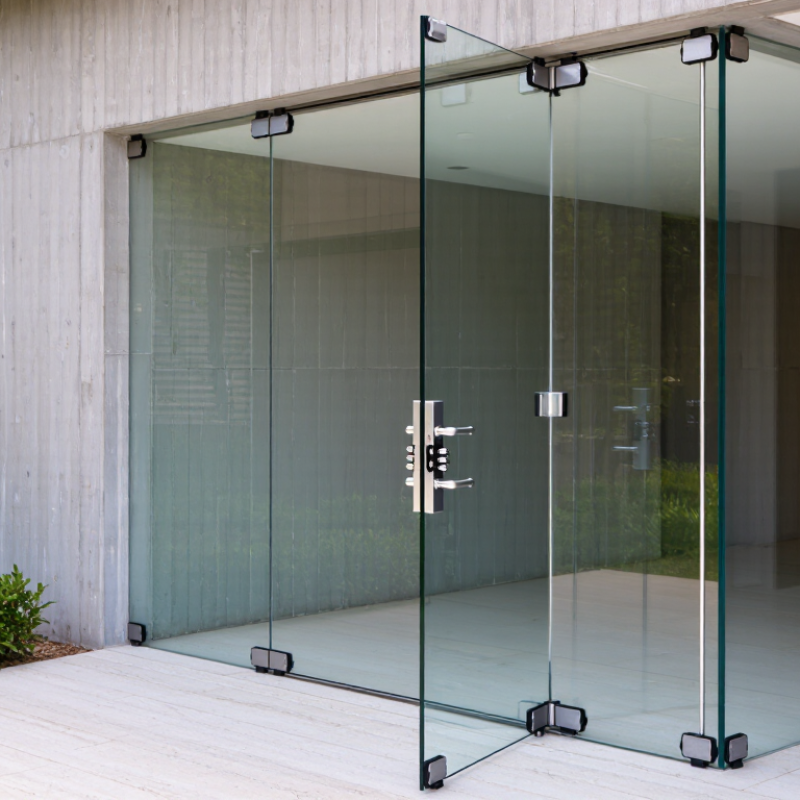
A glass security door is more than a clear panel in a metal frame. Its protection comes from several connected parts: the glass, frame, hinges, lock, and wall anchors. In practice, I inspect how these parts work together, not just how thick the glass feels.
Security glazing often uses laminated glass, which holds together after impact. Tempered glass can resist strong impacts, but it may break into smaller pieces when damaged. The frame must also retain the glass securely. Strong glazing with weak hinges is a poor combination. A door may look substantial, yet loose anchors or exposed hardware can reduce its resistance to forced entry. Certification and independent test evidence offer more reliable guidance than sales language.
Tips: Check the glass specification, frame construction, hinge protection, and lock mounting. Ask for test documentation from a qualified supplier. Examine the surrounding wall, too. It may be the weakest point. Keep visibility clear around the entrance, and arrange professional installation. I would not call any glass security door unbreakable. That claim deserves caution. Even a well-designed system can have flaws if installation is rushed or maintenance is ignored. A practical review should consider daily use, weather exposure, emergency access, and the building’s construction.
A security glass door is not simply thick glass in a metal frame. It works as a tested system. Laminated glass holds broken pieces together through an interlayer, making a clear opening difficult to create quickly. Tempered glass breaks into small granules, but it can leave the frame almost empty. That difference matters.
The EN 1627:2021 standard rates doors by resistance class and tested attack time. For example, RC2 testing includes about three minutes of active attack, while RC3 extends the test to five minutes. These figures are not promises for every home. They show controlled resistance under defined conditions. The FBI Crime Data Explorer recorded more than 800,000 burglary offenses in 2023, so delay remains valuable.
The frame matters just as much. A laminated panel with weak hinges or exposed fasteners may perform poorly. During site inspections, installers should check the wall anchors, lock case, glazing beads, and door alignment. Small gaps near the latch deserve attention. They are easy to overlook.
No door is invincible. That assumption is wrong.
Security glass can also crack, cloud, or require replacement after impact. Regular inspection is sensible, especially around corners and hinge points. Certified testing provides stronger evidence than thickness alone, but installation quality can still reduce real-world protection.
Are Glass Security Doors Safe Against Forced Entry?
Glass security doors can resist common impact, but their protection depends on the entire system. Laminated security glass may crack without collapsing, yet weak framing can still create a serious gap. Tempered glass is strong against impact, but it can fail suddenly when badly damaged.
The frame is often overlooked. Thin metal sections may bend near the lock or hinge side. Poorly anchored frames can pull away from masonry under repeated force. Glazing beads also matter. If they are exposed or loosely fitted, the glass panel may become easier to dislodge. Small installation gaps can become major weaknesses.
Locks and hinges need equal attention. A strong cylinder cannot compensate for flexible doors, short fixings, or unprotected hinges. Electronic access controls add convenience, but they still need emergency power and regular testing. Dust, loose screws, and worn seals are ordinary problems. They quietly reduce performance.
Professional inspection should examine the glass type, frame strength, fixing depth, door alignment, and surrounding wall. Standards and test certificates provide useful evidence, but they do not replace a site assessment. A product can pass testing and still perform poorly after careless installation. That uncomfortable detail deserves attention. Safety is a system, not a glass label.
EN 356 resistance thresholds for laminated security glazing tested with an axe attack
Higher classifications require more axe impacts during the EN 356 test: P6B requires 30–50 impacts, P7B requires 51–70, and P8B requires more than 70. These figures apply to the tested glazing assembly only. Forced-entry resistance can still be weakened by an inadequate frame, exposed hinges, poor lock protection, weak door-to-wall connections, or incorrect installation.
Data basis: EN 356 classification ranges for manually attacked security glazing. The chart shows the lower threshold of each range.
Glass security doors can resist forced entry when designed as complete systems. Glass alone is not security. Laminated glass is a stronger choice because its inner layer helps hold broken pieces together. This can slow penetration and preserve the door’s protective barrier. Tempered glass offers impact resistance, but it may shatter into small pieces. The frame and hardware matter just as much.
A reinforced frame should connect firmly to the surrounding wall. Multi-point locks distribute pressure across several areas, rather than relying on one latch. Protected hinges can reduce weaknesses along the opening side. Narrow, consistent gaps also make the door harder to manipulate. In field inspections, loose fasteners and poorly supported frames often reveal greater risk than the glass itself.
Installation quality remains critical. An independently tested door provides more reliable evidence than attractive specifications alone. Ask whether the complete assembly was tested, including the glass, frame, lock, and anchors. Door closers, access controls, and monitored sensors can improve response and everyday control. Regular checks should look for chips, loose hardware, frame movement, and damaged seals.
No glass security door is invulnerable. That matters. A strong panel can still perform poorly when installed in a weak wall. I would avoid judging safety by thickness alone. Real protection depends on tested components, careful installation, suitable maintenance, and the building’s overall security design.
A glass security door is only as strong as its complete assembly. Evaluate the glass, frame, hinges, locks, closers, and surrounding wall together. Laminated glass usually performs better than ordinary single-pane glass because its inner layer can hold broken pieces in place. Tempered glass resists impact well, but it may break into small fragments after severe damage. That difference matters.
For homes, examine the door’s resistance to prying, its visibility from nearby rooms, and the strength of the entry frame. Retail buildings need durable glass, reliable panic hardware, and protection against frequent impacts from carts or crowded entrances. Offices often require controlled access, clear sightlines, and safe evacuation. Schools and healthcare facilities may need reduced sharp edges, dependable opening force, and easy inspection. Each building creates different risks.
A practical review should include the wall around the door. A strong panel cannot compensate for a weak fixing point. Check whether the frame is firmly anchored, whether hinges are protected, and whether locks engage fully every time. Ask a qualified security or building professional to compare the installation with local safety codes and tested performance standards. Labels alone are not enough. Real conditions can expose weaknesses that product tests miss.
Maintenance is easy to underestimate. Loose hardware, worn closers, or damaged seals can reduce protection quickly. I would not call any glass door completely secure. That wording sounds reassuring, but it is rarely accurate. Reassess the door after renovations, changes in occupancy, or repeated impact.
| Building Type | Typical Forced-Entry Concern | Recommended Glass Construction | Frame, Lock and Hardware Requirements | Relative Safety Suitability | Important Evaluation Points |
|---|---|---|---|---|---|
| Private Homes and Apartments | Opportunistic impact, door prying, lock manipulation and unauthorized access through sidelights. | Use safety-rated laminated glass. A common starting point is laminated glazing with a plastic interlayer; thicker security laminates may be appropriate in exposed locations. | Use a reinforced frame, a deadbolt or multipoint lock, protected hinges, a properly anchored strike plate and laminated sidelights or transoms. | High when properly specified | Tempered glass improves injury safety but can still be penetrated after breakage. Laminated glass is generally more suitable for delaying forced entry because the interlayer helps retain broken pieces. |
| Retail Stores and Shopping Entrances | Repeated impact, smash-and-grab attempts, forced opening during closed hours and damage to large glazed areas. | Consider tested security laminated glazing or laminated insulating glass units. The security performance depends on the complete glass build-up, not only the outer pane. | Use heavy-duty commercial frames, continuous or reinforced hinges, protected lock cases, concealed fasteners where suitable and access control connected to an alarm system. | High with tested assemblies | Large glass panels create more attack area. Check the glass-to-frame bite, glazing beads, frame anchorage and whether the door assembly has been tested as a complete unit. |
| Banks, Jewelry Stores and High-Value Retail | Targeted attacks using repeated blows, tools or attempts to defeat the lock and surrounding frame. | Use a certified forced-entry-resistant glazing system selected for the site threat. Security glazing may combine multiple glass plies and specialized interlayers. | Use a tested doorset with reinforced steel or security-rated framing, monitored locks, protected cylinders, anti-pry details and secure anchorage to the structure. | High only with certified testing | Do not rely on glass thickness alone. Require documentation for the complete doorset, including glazing, frame, locks, hinges, fasteners and installation method. |
| Schools and Childcare Facilities | Accidental impact, intentional damage, unauthorized entry and the risk of dangerous shards in circulation areas. | Use safety glazing compliant with the applicable building code. Laminated safety glass is useful where both impact safety and post-breakage retention are important. | Use door closers, controlled access, anti-finger-trap details where required, safety-marked glass and hardware designed for frequent use. | High for safety; variable for security | Safety glazing and forced-entry resistance are different properties. Confirm impact classification, human-impact requirements and security performance separately. |
| Offices and Commercial Buildings | Unauthorized entry through lobby doors, tailgating, lock bypass and occasional vandalism. | Use laminated safety glass for doors and sidelights where retention after breakage is desired. Tempered glass may be suitable where security risk is limited and code permits. | Use access-controlled locks, electric strikes or electromagnetic locks where appropriate, reinforced door rails, secure hinges and a frame anchored to the wall system. | Medium to high, depending on threat | Electronic access control does not compensate for a weak frame or unsecured sidelights. Evaluate the whole entrance, including the wall and adjacent glazing. |
| Hospitals and Healthcare Facilities | High traffic, accidental impact, unauthorized movement, vandalism and the need for rapid emergency access. | Use laminated safety glazing in vulnerable doors and sidelights. Select glazing that meets the required impact, hygiene and fire-performance criteria for the location. | Use durable access-control hardware, monitored exit devices, anti-ligature or specialist hardware where required, and frames compatible with healthcare cleaning procedures. | Medium to high | Security features must not obstruct emergency egress. Verify door release, fire alarm integration, accessibility and local healthcare requirements before installation. |
| Government and Critical-Infrastructure Buildings | Planned attacks, forced entry with tools, coordinated intrusion and attempts to exploit weak points around the door. | Specify a complete tested security doorset with forced-entry-resistant laminated glazing appropriate to the required threat level. | Use reinforced frames, security-rated hinges, protected locking systems, controlled entry vestibules, monitored alarms and structural anchorage designed for the wall condition. | High with threat-based certification | Use a formal security assessment and a recognized test classification. The required level should be based on asset value, response time, occupancy and attack method. |
| Hotels and Apartment Lobbies | Vandalism, unauthorized access, overnight intrusion and frequent operation by the public. | Use laminated safety glass in entrance doors and sidelights. For exposed ground-floor locations, consider security laminated glazing that has been tested for forced entry. | Use access control, automatic operators where appropriate, heavy-duty pivots or hinges, protected closers and frames securely connected to the surrounding structure. | Medium to high | High-use hardware can fail if poorly maintained. Include regular inspection of locks, closers, seals, glazing retention and frame fixings. |
| Industrial and Warehouse Buildings | After-hours intrusion, tool attacks, vehicle-related impact and attempts to enter through less-visible side doors. | Use laminated safety or security glazing where visibility is needed. In high-impact areas, consider reducing exposed glass or protecting it with an independently anchored barrier. | Use steel-reinforced frames, heavy-duty locks, hinge protection, bollards where vehicle impact is possible and an alarm connected to monitored access control. | Medium to high, depending on exposure | Glass doors should not be the only security layer. Protect the frame, surrounding wall, roofline, service doors and any nearby panels that could provide an alternative entry route. |
| Public Transport and Civic Facilities | High vandalism rates, repeated impact, crowd pressure, forced opening and constant public contact. | Use certified safety glazing selected for human impact and, where required, laminated glazing that retains fragments after breakage. | Use vandal-resistant hardware, robust frames, tamper-resistant fasteners, controlled access for staff areas and designs that support rapid evacuation. | Medium to high | Prioritize both safe breakage behavior and resistance to repeated abuse. The appropriate specification depends on passenger volume, visibility, vandalism history and emergency procedures. |
It works as a complete system. The glass, frame, hinges, lock, and wall anchors must resist pressure together. A thick panel alone proves very little.
Laminated glass can hold together after impact. Its inner layer helps keep broken pieces in place. This may delay penetration and preserve the barrier. It is not unbreakable.
Tempered glass can resist strong impacts. When it fails, it may break into many small pieces. That behavior differs from laminated glass. The frame still needs to retain the glazing securely.
Yes. A strong panel with weak hinges remains a poor design. Protected hinges reduce opening-side weaknesses. The frame should connect firmly to the surrounding wall.
Multi-point locks spread pressure across several locations. A single latch concentrates pressure in one area. Lock mounting must also be reinforced and properly aligned.
Ask for independent test evidence for the complete assembly. Check the glass, frame, lock, hinges, and anchors. Sales descriptions can sound convincing. They are not enough.
Very much. Loose anchors, wide gaps, or a weak wall can reduce resistance. Installation should match the building structure. Rushed work creates hidden problems.
Inspect chips, loose hardware, frame movement, damaged seals, and changing gaps. Check closers, sensors, and access controls when installed. Small defects deserve attention. I may underestimate them at first.
No door should be called invulnerable. Weather, poor maintenance, and weak construction can reduce protection. I would avoid judging safety by thickness alone. That claim needs caution.
Keep visibility clear around the entrance. Consider emergency access and daily traffic. Review the surrounding wall, not only the door. The wall may be the weakest point.
Are glass security doors actually safe against forced entry? Their safety depends on the complete door system rather than glass alone. A true glass security door typically combines laminated or tempered security glass with a reinforced frame, strong hinges, secure locks, and carefully installed hardware. These elements work together to delay impact, resist prying, and reduce the risk of dangerous shattering.
However, weaknesses can appear when the frame is poorly anchored, the locking system is basic, or gaps exist around the edges. Security can be improved with multi-point locks, reinforced hinges, impact-resistant glazing, protective films, alarm sensors, and professional installation. When evaluating a glass door, building owners should consider the property’s location, occupancy, visibility, emergency exit requirements, and likely security concerns. With the right design, testing, maintenance, and installation, glass security doors can provide both transparency and meaningful resistance to forced entry.
