 Armor Door
Armor Door
Armor Door
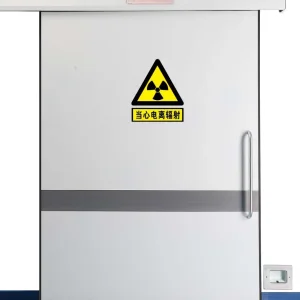
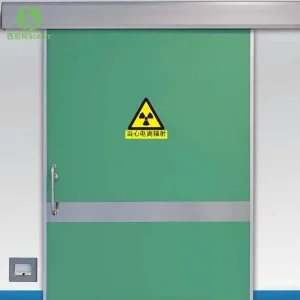
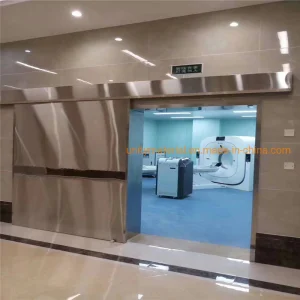
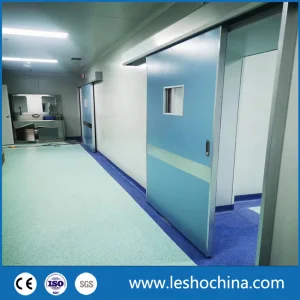
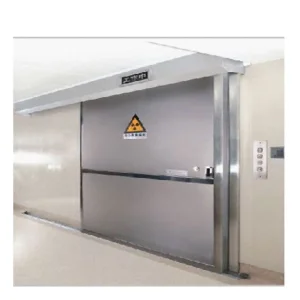
High-performance radiation barrier assemblies tailored for rapid installation, featuring certified lead lining and robust structural cores.
The metropolitan area of Algiers, along with surrounding provinces such as Blida and Oran, is undergoing an unprecedented modernization of its healthcare system. Driven by both public infrastructure funds and private clinical investments, the development of modern oncology wards, diagnostic imaging laboratories, and nuclear medicine facilities is accelerating. Key institutions such as the Centre Pierre et Marie Curie (CPMC) in Algiers, along with various regional university hospital centers (CHUs), require advanced physical barriers to mitigate the hazards associated with high-frequency ionizing radiation (X-rays, gamma rays, and neutron beams).
Additionally, Algeria's status as a major regional hub for oil, gas, and heavy manufacturing has created substantial demand for non-destructive testing (NDT) capabilities. Industrial radiography bunkers used for examining pipeline welds, structural castings, and aerospace alloys utilize high-activity cobalt-60 (⁶⁰Co) or iridium-192 (¹⁹²Ir) isotope sources. The doors guarding these chambers must provide significant attenuation, which requires precise engineering, structural steel integrity, and continuous lead sheet layers. The Algiers market requires suppliers capable of delivering highly specialized radiation shielding doors that balance biophysical protection, motorized automation, and hermetic cleanroom compliance.
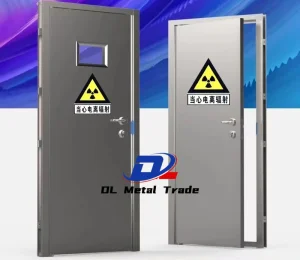
Designing doors lined with lead sheets presents complex mechanical and structural challenges. Because lead is dense ($11.34\text{ g/cm}^3$) and lacks structural strength, unsupported vertical sheets can sag under their own weight over time, causing shielding gaps at the top of the door frame. To prevent this, our manufacturing process utilizes a sandwich structure: the lead sheet is bonded to high-strength galvanized steel plates using specialized industrial adhesives, then mechanically secured within an internal structural matrix.
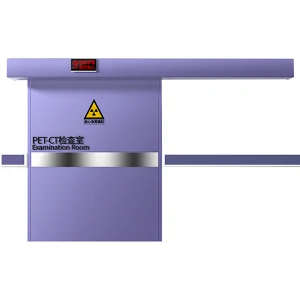
For high-energy rooms such as CT scanners (2mmpb to 3mmpb) and PET-CT installations (3mmpb to 5mmpb+), the weight of the door leaf can exceed 400kg. Moving this weight smoothly requires heavy-duty hinges, reinforced overhead track systems, and industrial-grade brushless DC motors. Without high-end engineering, these systems will suffer early track wear, sagging doors, and motor failure. Additionally, the door frames must feature overlapping lead inserts to ensure that no secondary scattered radiation escapes through the frame-wall interface.
In operating theaters, hybrid imaging suites, and cleanroom research laboratories in Algiers, radiation protection must be integrated with strict infection control measures. Standard sliding doors allow air exchange, which can introduce airborne pathogens. Our hermetic lead-shielded doors solve this problem through a drop-down, push-close track system. When the door closes, the carriage drops down and slides inward, compressing heavy-duty neoprene gaskets against the frame and floor. This design maintains positive or negative air pressure and achieves a certified airtight seal, protecting both the clinical environment and patients.
All imported shielding solutions in Algiers must comply with both local regulations and international standards. The Algerian Ministry of Health (Ministère de la Santé, de la Population et de la Réforme Hospitalière) and the National Atomic Energy Authority oversee radioprotection compliance. Standard requirements include:
Founded in 1998, Jiangmen Armor Door Co., Ltd. has established itself as an innovative manufacturer of high-quality security, industrial, and radiation protection doors. By combining technical expertise with modern production facilities, we supply advanced shielding solutions worldwide. Our dedicated engineering and customer service teams support projects from initial planning through custom fabrication to export logistics for the Algiers market.
Our commitment to excellence is reflected in our structured service delivery process:
Our experienced sales staff works closely with clinical planners and project managers to understand each project's unique shielding and functional requirements. We recommend tailored configurations for layout, lead equivalence, and automation to match specific project parameters.
Precision manufacturing is essential for effective radiation shielding. We confirm all measurements and design specifications prior to production, ensuring the finished door assemblies fit perfectly and eliminate shielding weak points during installation.
Our staff undergoes continuous technical training to stay aligned with current international radioprotection standards. We provide clear technical documentation, shop drawings, and installation guides to support local contractors.
Our organized manufacturing processes and flat management structure enable us to respond quickly to custom design requests and maintain reliable production schedules, helping projects stay on track.
We continuously invest in research and development to improve our products. From advanced airtight tracks to smart safety sensors, our door systems integrate proven engineering improvements.
We work to minimize waste and optimize energy use throughout our manufacturing processes, creating durable, low-maintenance shielding products that support sustainable building operations.
| Application Type | Typical Operating Energy (kV) | Recommended Lead Equivalence (Pb Eq) | Common Surface Material Options | Door Assembly Configuration |
|---|---|---|---|---|
| Dental / Panoramic X-Ray | 60 - 90 kV | 1.0 - 1.5 mm Pb | HPL / PVC coated steel | Manual Swing / Sliding |
| General Radiography (DR/CR) | 100 - 125 kV | 2.0 mm Pb | Stainless Steel / Painted Steel | Automatic Sliding / Swing |
| CT Scanner Suite (64/128 Slice) | 120 - 140 kV | 2.0 - 3.0 mm Pb | Stainless Steel 304 / HPL | Heavy-duty Automatic Sliding |
| PET-CT / Nuclear Medicine | 511 keV (Annihilation) | 3.0 - 5.0 mm Pb | Stainless Steel 304 | Power-Assisted Sealed Sliding |
| Industrial Radiography / NDT | 200 kV - 1 MeV (Co-60) | 10 - 50 mm Pb / Steel Composite | Heavy Galvanized Structural Steel | Custom Heavy-Duty Drive |
Modern clinical facilities increasingly require integration with smart hospital systems. Future radiation barrier designs are shifting from passive components to active systems connected to the building's building management system (BMS). Key developments include wireless status monitoring, predictive maintenance tracking for motors, and automated safety interlocks that prevent imaging equipment from activating unless the door is completely closed and sealed.
We are incorporating these smart technologies into our automated doors, allowing engineering teams in Algiers to monitor door cycles, sensor performance, and seal wear in real time. These capabilities help prevent unexpected downtime in high-use clinical suites.
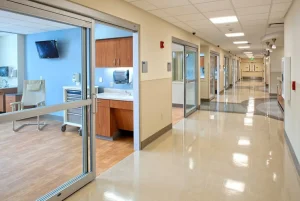
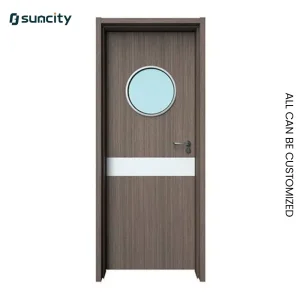
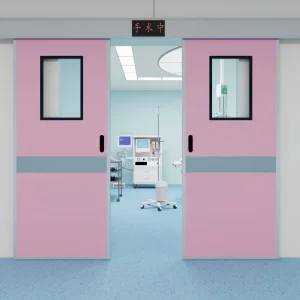
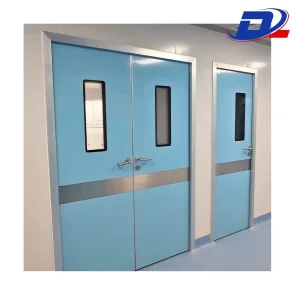
Explore our range of sliding, swing, hermetic, and steel-reinforced lead-lined doors designed for hospitals and industrial settings in Algiers.
From design to delivery, we prioritize precision, durability, and customer service.
Our sales staff works to understand your specific requirements and suggests configurations that align with your clinical or industrial application.
We verify structural and dimensional specifications before production to ensure a precise fit and reliable shielding integrity at your facility.
Our engineering and customer support teams are trained in current industry standards to provide dependable technical guidance.
Organized management and manufacturing processes help us maintain predictable delivery schedules for international projects.
We continuously invest in design updates, such as advanced airtight seals and intelligent safety sensors, to improve product performance.
We work to optimize energy use and reduce material waste during production, building durable door assemblies with a low total cost of ownership.
Specialized configurations for higher energy diagnostic suites, computerized tomography, and intensive care units.
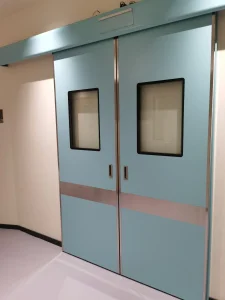
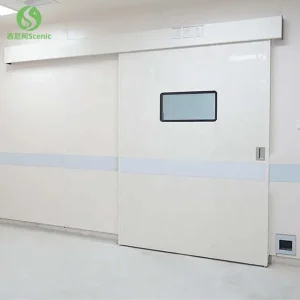
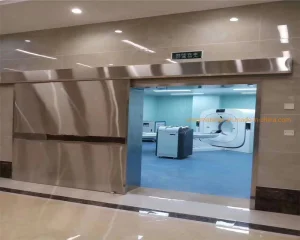
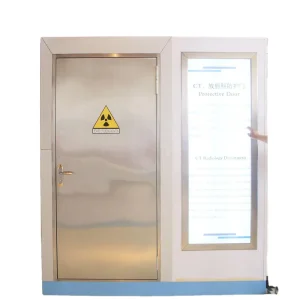
Answers to common queries regarding lead-shielded doors, shipping to Algeria, and installation standards.
For standard diagnostic CT scanners (typically operating up to 140 kV), a lead thickness of 2.0 mm Pb (millimeter lead equivalent) is typically specified. High-throughput scan rooms or PET-CT facilities may require 3.0 mm Pb or more, depending on local regulatory reviews and distance calculations.
Yes. Our lead doors are manufactured to meet or exceed international ISO 9001 and CE quality standards. We provide material testing certificates and lead purity documentation to support local approval processes in Algeria.
Due to their weight, our radiation shielding doors are packed in reinforced, seaworthy wooden crates to prevent damage. We manage export shipping from China to the Port of Algiers, providing the necessary documentation—such as commercial invoices, packing lists, and certificates of origin—to facilitate customs clearance.
Yes. We customize door dimensions, lead equivalent thicknesses, and surface finishes (such as high-pressure laminates or 304 stainless steel) to fit existing door frames or new construction layouts.
Discuss your project's shielding requirements with our engineering team today to receive a detailed technical quote.
Send Inquiry Now